
How to find and remove fake LinkedIn profiles impersonating your brand
What LinkedIn's policy allows, who is entitled to report, the evidence that gets a result, the reasons reports fail, and what to do when the profile comes back.
In this article
The short version. Handles finds fake LinkedIn profiles using your brand (Radar searches LinkedIn alongside Instagram, TikTok, X, YouTube, Facebook), separates the ones that mislead people from namesakes and commentary, and builds the evidence LinkedIn asks for.
LinkedIn requires the impersonated organisation or person to confirm the report, so the filing goes in under your name with our packet behind it and a named person approving it. LinkedIn makes the final decision; across all our clients, 99.2% of resolved takedown claims have ended in removal.
What LinkedIn's rules say about impersonation
LinkedIn's Professional Community Policies prohibit fake profiles, misrepresentation of identity and impersonation of people or organisations.
A fake personal profile can be reported from the profile itself; a duplicate or fake Company Page is reported through LinkedIn's help centre, where the real organisation can show it is the legitimate owner. Trademark complaints use LinkedIn's notice of trademark infringement.
Policies and forms change. Check the current policy page before filing, and keep a copy of the version you relied on with the case record.
Who can report
For a fake company page: the organisation, usually via an existing page admin. For a fake executive profile: the executive or the organisation with their authorisation. LinkedIn may ask the impersonated person to confirm identity.
The evidence that gets a fake LinkedIn profile removed
Platforms act on evidence, not on how upset you are. A report that arrives with the items below is reviewed faster and rejected less often.
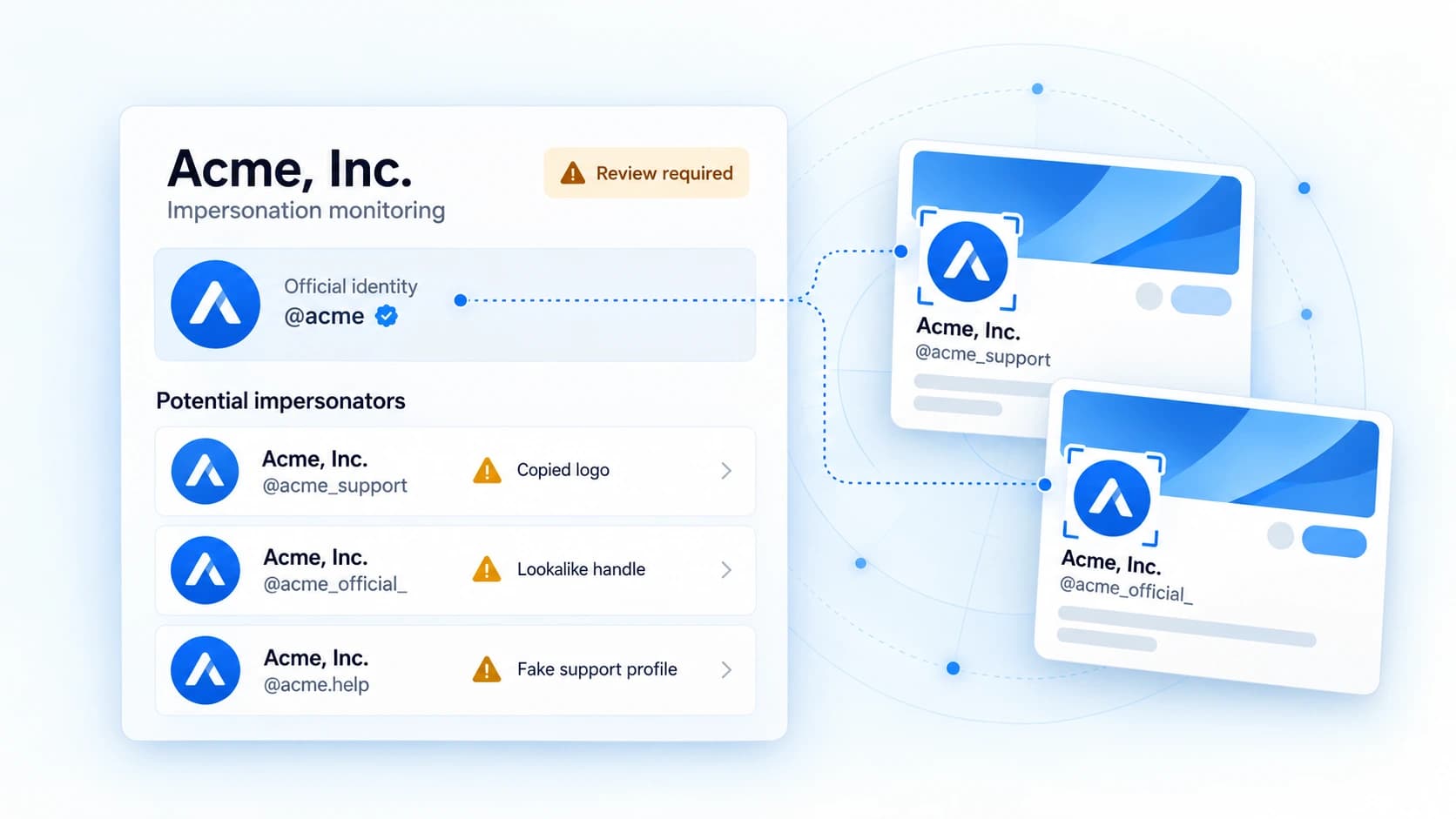
- URL of the fake profile or page and screenshots of headline, about section, experience and recent activity, timestamped
- Your official Company Page and the executive's genuine profile
- Evidence the profile uses your name, logo, job titles or employee photos
- Messages sent from the fake profile: recruitment scams, invoice requests, investment approaches
- Proof of authority to act for the organisation and the individual named
From suspicious account to platform decision
Figure 1
The process at a glance
- 1IdentifyRadar searches for profiles using your brand name, imagery and content, and shows each candidate next to your official presence.
- 2Review evidenceA specialist reviews the account, the harm and the evidence against the relevant policy, and separates parody, fan and legitimate accounts from impersonation.
- 3Approve and submitA named person approves the packet. LinkedIn asks the impersonated party to confirm, so the report goes in under your authority with our evidence attached and our team on the follow-up. Nothing is filed automatically.
- 4Track and watchThe platform's response and next steps sit on the case record. Monitoring continues so a recreated profile is found without a new request.
Why fake LinkedIn profile reports fail
LinkedIn distinguishes between a fake profile and a real person falsely claiming to work for you; the second is handled as misrepresentation and can take longer.
Duplicate company pages created by well-meaning employees or franchisees are not impersonation and need a merge request instead.
Executive impersonators often keep a sparse profile and do the harm in direct messages, which the platform cannot see from the public profile.
When the profile comes back
Fake executive profiles are cheap to recreate. Keep an inventory of your genuine executive and company pages so each new report can show the official presence immediately, and monitor for new profiles using executive names and photos.
Customer story
A brand is only as strong as its authenticity. Our community always knows exactly where to find our official voice.
412,000+
accounts reported by handles across all clients.
Source: handles platform figures
Frequently asked questions
Can Handles remove a fake LinkedIn profile?
We find it, investigate it and prepare the evidence LinkedIn asks for. LinkedIn requires the impersonated organisation or person to confirm the report, so it is filed under your authority with our packet behind it; we track the response. LinkedIn decides the outcome. Across all clients, 99.2% of resolved takedown claims ended in removal.
How long does LinkedIn take to remove an impersonating profile?
It varies with the route, the evidence and the platform's queue, from days to several weeks. Reports filed by the brand with full evidence move fastest. We record the response times on each case so you can see the pattern for your own brand.
Do I need a registered trademark?
Not for an impersonation report, which rests on the profile misleading people about who runs it. A registered trademark opens the intellectual property route, which is often the better basis where the profile copies your logo or name but claims to be a fan or reseller. Handles records your rights position alongside each case.
What if the profile says it is a fan or parody account?
LinkedIn generally permits clearly labelled parody, fan and commentary accounts that do not mislead. The question is whether a reasonable user would think it is official. We show you the bio, imagery and content so a person decides before a claim is raised, and we say when a case is unlikely to succeed.
How much does a takedown cost?
Requesting an assessment is free and does not authorise paid work. Takedown and claims work is scoped per case or as part of a Radar subscription; platform plans start at six accounts and pricing is published.
How do I stop fake LinkedIn profiles appearing in the first place?
You cannot stop them entirely. You can shrink the space they work in: hold the obvious handle variants, keep a verified list of official accounts customers can check, monitor continuously, and report early before an account builds an audience.
Related: Social media impersonation takedowns · Radar: impersonation detection · Executive impersonation protection · Trademark enforcement on social media
Send us the link and your official account. A specialist reviews it and explains the route; submitting does not start paid work.
Request a takedown assessmentCheck the research and platform guidance behind claims used across the site in our sources & references .
Continue reading
All articles
Executive impersonation: how fake CEO profiles work, and how to remove them
Fake executive accounts are the entry point for recruitment scams, invoice fraud, investment pitches and reputational damage. Here is how they operate on each platform, why they are harder to remove than brand fakes, and the evidence that works.
How to find and remove fake X (Twitter) accounts impersonating your brand
What X's policy allows, who is entitled to report, the evidence that gets a result, the reasons reports fail, and what to do when the account comes back.
How to find and remove fake YouTube channels impersonating your brand
What Google's policy allows, who is entitled to report, the evidence that gets a result, the reasons reports fail, and what to do when the channel comes back.