
Trademark enforcement on social media: a working guide for in-house counsel
When to use the trademark route and when impersonation is the stronger basis, what each platform's IP process asks for, how Meta Brand Rights Protection fits, and how to keep an enforcement record that survives an audit or a dispute.

In this article
The short version. Against misuse of your mark on social platforms you have two routes: the platform's impersonation policy, which rests on deception, and its intellectual property process, which rests on a registered mark. Most fakes qualify for both; the stronger first filing is the one your evidence supports.
Handles gives counsel the operating layer for this: a rights dossier, a readiness matrix showing which route is open on each platform today, and a case ledger with a named approver on every submission, so legal, brand and security work from one record.
adidas, working with Handles, ranks in the top five companies removing infringing items through Meta Brand Rights Protection since its programme began.
Impersonation route or IP route
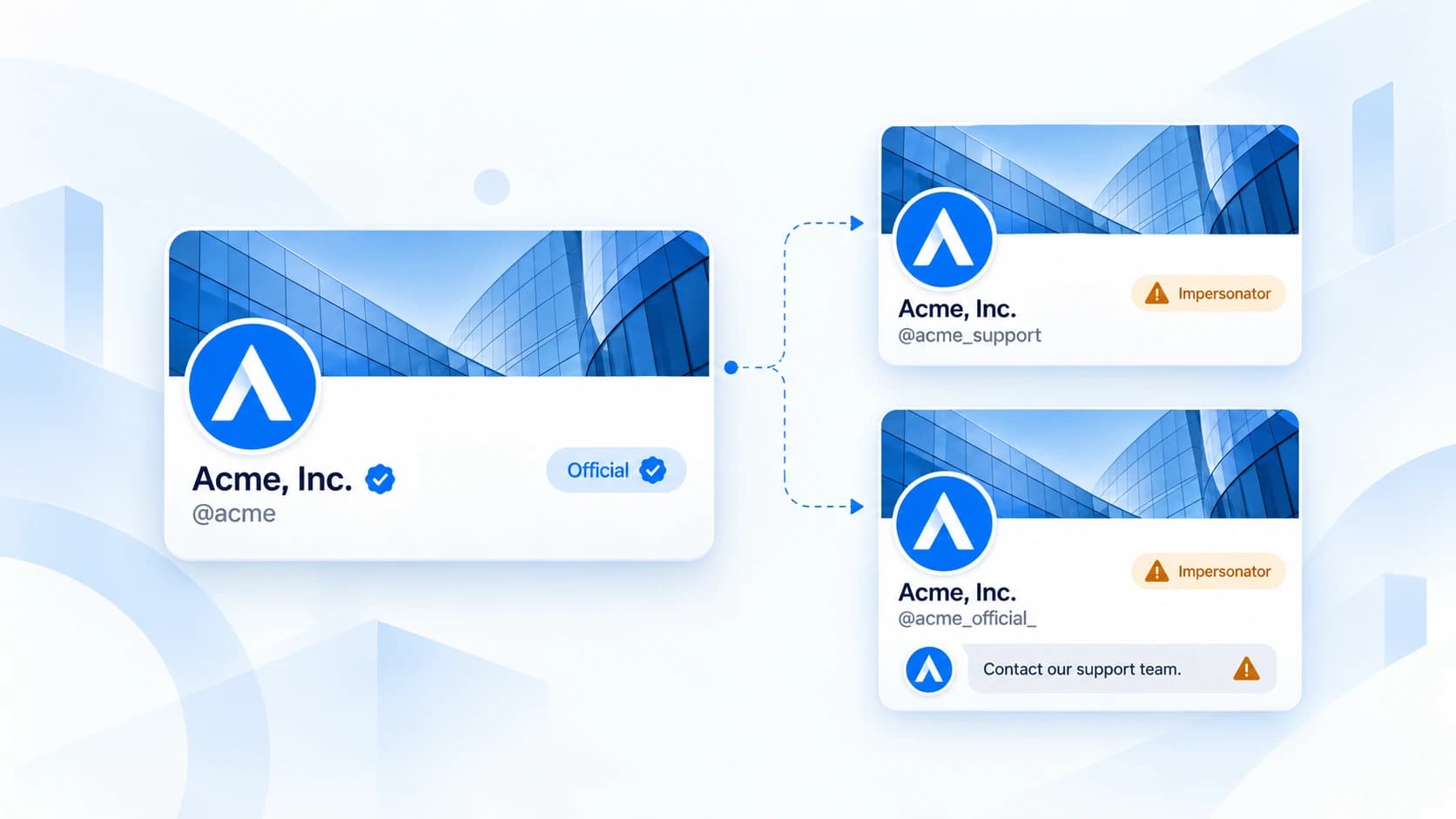
| Impersonation policy | Intellectual property process | |
|---|---|---|
| Basis | The account misleads people about who runs it | Unauthorised use of a registered trademark (or copyright in creative) |
| Needs a registration? | No | Yes for trademark; copyright for logos and creative |
| Covers | Fake profiles, pages, channels presenting as official | Marks in names, handles, avatars, posts, ads, shop listings |
| Weak against | Labelled parody, fan and commentary accounts | Referential, descriptive or nominative use; resellers |
| Who files | Brand or authorised representative | Rights holder or authorised agent, with registration details |
| Typical outcome | Account removal or forced rename | Content or listing removal; account action after repeat notices |
What each platform's IP process asks for
Meta (Instagram and Facebook)
IP report form for trademark and copyright; Brand Rights Protection console for rights holders with registered marks, giving search and bulk reporting across both platforms. Enrolment requires a registration certificate and a business account.
TikTok
Intellectual property report form for trademark and copyright; TikTok Shop IP Protection Center for sellers with registered marks. Asks for registration number, jurisdiction and the specific content.
X
Trademark policy form; X distinguishes trademark misuse from permitted referential use and parody. Asks for registration details and the reporter's authority.
Notice of trademark infringement for marks used in profiles, pages or content; separate flow for fake company pages. Asks for registration and the specific URLs.
YouTube
Trademark complaint form for channel names, handles and content; copyright tools for lifted footage. Asks for registration, jurisdiction and the allegedly infringing URLs.
Everywhere
A pending application is recorded as an application. Some routes accept it or another basis; some require registered rights. Record the status as it is.
The packet that gets accepted
- Registration certificate or database record: owner, mark, jurisdiction, classes, status, reference numbers
- Authority to act, if the filer is not the registered owner
- URLs of the infringing use and timestamped screenshots showing the mark in name, handle, avatar, post, ad or listing
- The official account on the same platform, so the reviewer can see the confusion
- A short statement of why the use is not referential, descriptive or parody
- For repeat offenders, the prior case references and outcomes
Keeping an enforcement record that holds up
Enforcement on social platforms generates hundreds of small decisions: which accounts to act on, which route, who approved, what the platform said.
Most legal teams keep these in email and a spreadsheet, which means the second case against the same infringer starts from nothing, and an auditor or opposing counsel asking for consistency gets a shrug.
Handles keeps a rights dossier (owner, mark, jurisdiction, status, documents, authority), a platform-readiness matrix (the route available on each platform and any gap preventing a filing today), and a case ledger (candidate use, evidence, internal approval, submission, platform response, in sequence).
Every filing has a named approver. Nothing is submitted automatically.
Where legitimate use is left alone
News, criticism, commentary, parody, fan activity and referential use can be legitimate. Similarity is a starting point, not a conclusion. Ambiguous cases are flagged for a person to decide, and the decision is recorded, which is what protects you when someone later asks why one account was reported and another was not.
From candidate use to platform response
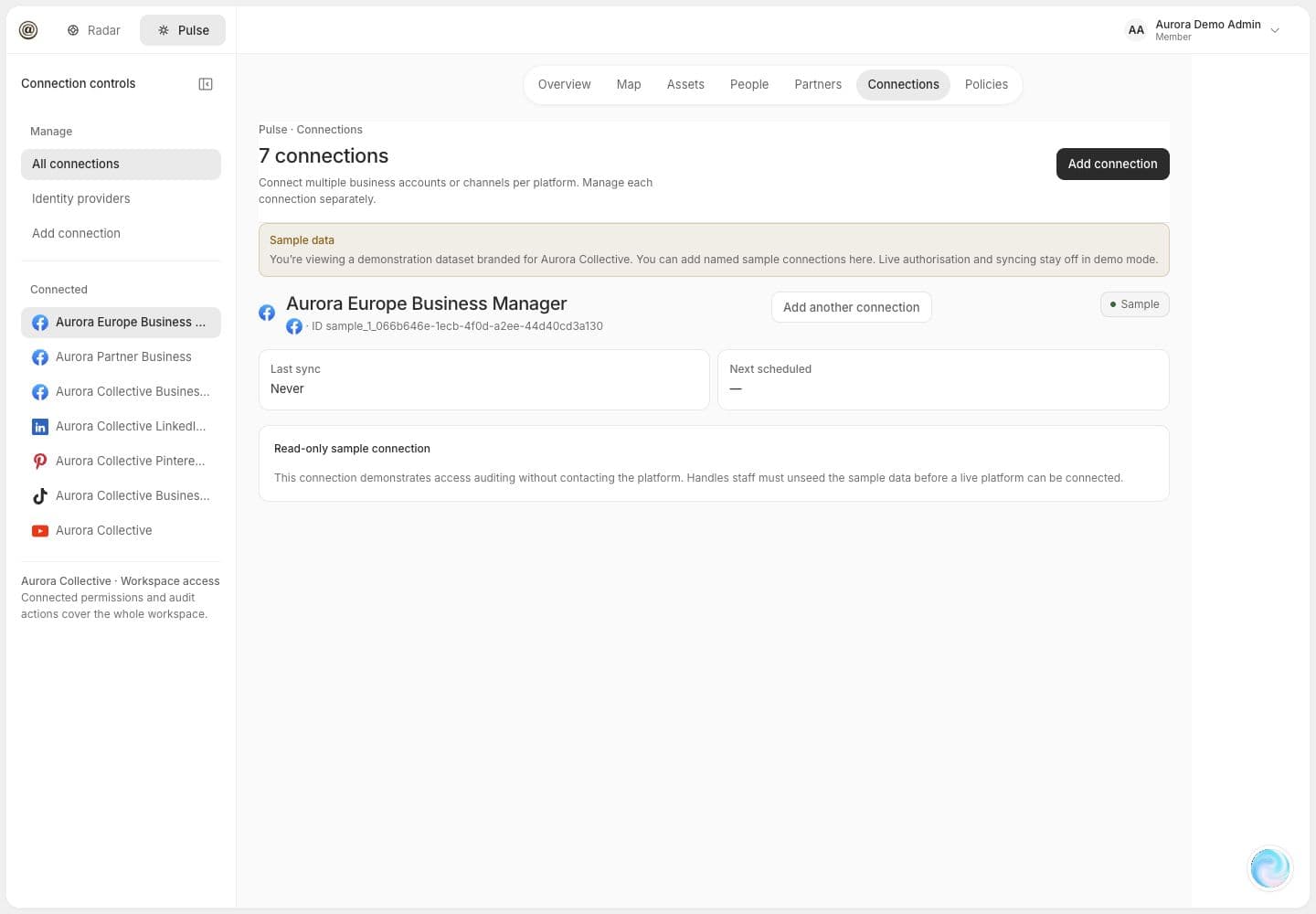
Figure 1
The process at a glance
- 1Establish the recordConfirm owner, mark, jurisdiction and status. Missing documents stay visible until resolved.
- 2Assemble the evidencePair the rights record with authority, official accounts, screenshots and the requirements of the available route.
- 3Review the useAssess the account in context. Uncertain or legitimate use is not turned into an automatic claim.
- 4Approve and submitA named person approves the packet. The platform applies its own policy and decides; no outcome is guaranteed.
Customer story
Social media lets adidas connect worldwide, but fake accounts undermine our voice. The Handles team crushes that risk by wiping out fakes and safeguarding the authenticity of our official channels.
9,000+
social accounts removed for adidas in phase one.
Source: handles adidas case study
Frequently asked questions
Do I need a registered trademark to remove a fake account?
No. Impersonation reports rest on deception, not registration. A registration opens the IP route, which is stronger where the account uses your mark but does not claim to be you (resellers, lookalike shops, 'fan' pages using your logo).
Does a registration guarantee the platform will act?
No. Each platform applies its own policy, reviews the specific use and makes its own decision. A clear, evidenced submission improves the odds; nothing guarantees them.
What is Meta Brand Rights Protection and should we enrol?
A console Meta offers to rights holders with registered trademarks, with search and bulk reporting across Facebook and Instagram. It is worth enrolling if you have registered marks and a steady volume of misuse on Meta platforms. It does not cover other networks, and it still needs someone to review and decide.
Can you trademark a social media handle?
A handle can be protected where it functions as a mark, but registration of the word does not transfer the handle. Platform handle rules, prior use and the account holder's conduct all matter. Handles' acquisition work operates within platform rules and is separate from trademark filing, which remains counsel's work.
Does Handles file trademark applications or give legal advice?
No. Where filing is needed we coordinate the operational inputs with your qualified counsel. We prepare platform submissions, keep the rights record and the case ledger, and leave legal strategy to counsel.
How does this fit with brand and security teams?
They see the same record. Brand sees which official accounts exist and which fakes are live; security sees which cases involve phishing or payment fraud; legal sees the rights basis and approvals. One ledger, three audiences.
Related: Trademark filing and platform readiness · Fake Instagram accounts · Fake Facebook pages · Legal and IP solutions
Share your mark portfolio and official accounts and we will show you the routes open today, platform by platform.
Speak to the legal and IP teamCheck the research and platform guidance behind claims used across the site in our sources & references .
Continue reading
All articlesHow to find and remove fake Instagram accounts impersonating your brand
What Meta's policy allows, who is entitled to report, the evidence that gets a result, the reasons reports fail, and what to do when the account comes back.
How to find and remove fake Facebook pages impersonating your brand
What Meta's policy allows, who is entitled to report, the evidence that gets a result, the reasons reports fail, and what to do when the page comes back.
The 9 best social media brand protection tools in 2026
Nine providers compared on what buyers actually check: platform coverage, impersonation detection, takedown workflow, account and access governance, evidence quality and published pricing.