
For enterprise social account migrations
Move social accounts
with access accounted for.
For a merger, rebrand or agency handover, Pulse shows connected accounts and recorded access in one view. Plan each authorised change across Facebook, Instagram, TikTok, YouTube, LinkedIn and X with the responsible teams.
Ownership · access · continuity
Access questions in a handover
Who can use each account after the move?
A merger, rebrand, agency switch or restructure can shift responsibility for many accounts while old permissions remain. Record the incoming owner, outgoing roles and unresolved changes for each account.
The brand moves. An account stays behind.
A page remains with the previous business manager, or a channel still belongs to an outgoing agency. The new team can inherit a public presence it cannot fully administer.
Old access survives the handover.
Former employees and partners may retain roles that let them publish, change settings or manage ad assets. Remove access too early and work stops; leave it unreviewed and the exposure continues.
The audience finds the wrong account.
An old profile stays live, a new name is inconsistent or a regional page is absent from the plan. Customers can end up with an abandoned channel or a convincing lookalike.
Plan for platform rules
One cutover date. Different account rules.
Scale does not make native platform requirements disappear. Give every dependency an owner, a sequence and evidence of completion.
as a YouTube Brand Account owner before you can make yourself primary owner. A real dependency to plan into the cutover.
Google’s ownership guidancemajor social platforms in the plan: Facebook, Instagram, TikTok, YouTube, LinkedIn and X, with platform-specific account and permission rules.
Google’s seven-day rule is specific to YouTube Brand Account primary ownership, not a universal migration lead time. The six-platform figure counts the channels named here, including both Facebook and Instagram under Meta; it is not a measured customer estate or a handles outcome. Native account and audience transfer options depend on each platform.
How handles supports the move
Plan each account change in order.
Pulse brings connected accounts and recorded access into one view. Your teams approve each decision; Back Office supports separately authorised administrative work. Local teams keep their responsibilities while everyone works from the same plan.
Before migration
Map the estate before changing access.
Bring connected Facebook, Instagram, TikTok, YouTube, LinkedIn and X accounts into one register. Identify the business managers, agencies, teams and roles behind them. Agree which accounts to retain, rename or retire, and investigate Radar candidates outside the known list before they become cutover surprises.
What your team takes forward
- Connected accounts mapped to responsible teams
- Candidate accounts and ownership gaps investigated
- Account decisions and platform dependencies recorded
At cutover
Move access in the right order.
Work through the approved plan account by account. Check incoming access before removing outgoing roles, review recovery contacts and coordinate authorised native-platform changes. Keep brand, IT, legal and agency teams aligned around the same account record.
What your team takes forward
- Incoming access verified before removal
- Recovery and ownership changes checked
- Completed work and open dependencies recorded
After migration
Verify the new estate. Close what remains.
Compare the new team structure with recorded platform access. Review former employee and agency permissions, assign owners to legacy profiles and keep unresolved changes visible. Use Radar to watch for lookalikes or candidate accounts missed by the original register.
What your team takes forward
- Outgoing permissions and recovery routes reviewed
- Retained and renamed accounts accounted for
- Unresolved risks assigned for follow-through
The migration estate in Pulse
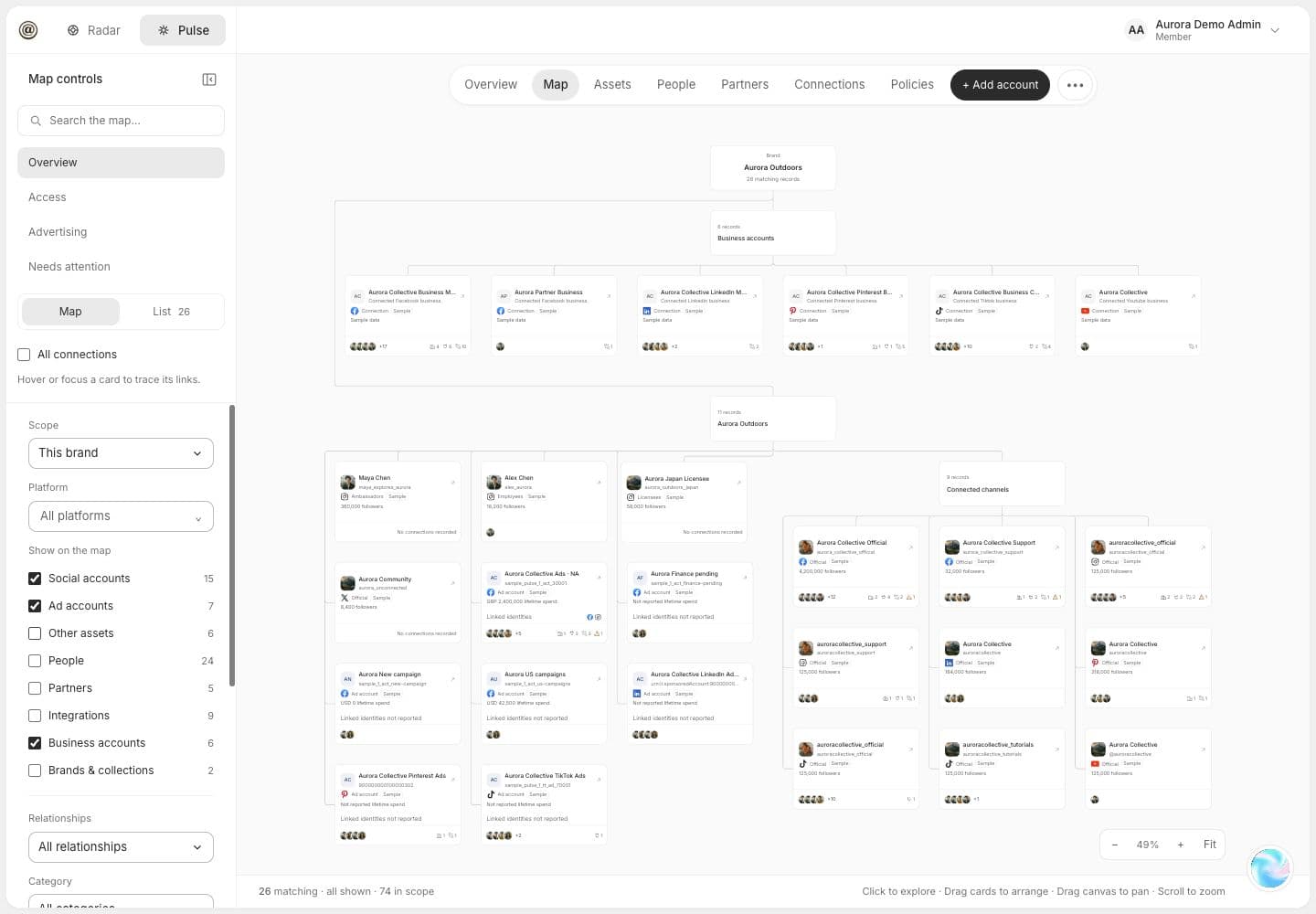
See connected accounts and their access.
Bring business managers, accounts, assets and people into one view. Review an individual role alongside the brand, region or agency it belongs to.
One account view
Identify the connected business, team and partner behind each account before approving its next step.
A sequenced handover
Keep incoming access, outgoing roles and unresolved dependencies in the same migration brief.
Decisions the next team can use
Document verified changes and responsible owners, including retained legacy profiles and open actions.
Before the cutover
The questions to settle early.
Can every account move in one cutover?
Not every platform follows one timetable. Ownership checks, waiting periods and naming availability can affect the sequence. For example, Google requires at least seven days as a Brand Account owner before you can make yourself primary owner. Agree dependencies and fallback owners before changing access.
Does Pulse make the platform changes automatically?
No. Pulse provides a central view of connected accounts and recorded access; your team approves the migration decisions. Back Office can support separately scoped administrative changes through named access you authorise. Incoming access should be checked before outgoing access is removed. Platform rules determine which changes are available.
What if some accounts are missing from the handover list?
Radar can surface public profiles associated with the brand for investigation. A matching name or logo does not establish ownership. Confirm the relationship with the relevant team or partner before adding a candidate to the migration plan.
What happens to legacy accounts and audiences?
Decide account by account whether to retain, rename or archive. Keep a responsible team for every account that stays live. A connected register does not merge followers or accounts on the underlying platforms; those options depend on each platform’s rules.
Do we need to share passwords or give up local control?
No. handles does not manage passwords. Pulse reviews recorded permissions from connected systems, and administrative work uses the named access you authorise. Regional and brand teams can remain responsible for their accounts while the central team keeps the combined estate and outstanding actions in view.
From first map to verified handover
Agree who owns every step of the handover.
Share the platforms, teams and target date. We’ll help you map connected accounts, identify dependencies and plan the handover.