
Executive impersonation: how fake CEO profiles work, and how to remove them
Fake executive accounts are the entry point for recruitment scams, invoice fraud, investment pitches and reputational damage. Here is how they operate on each platform, why they are harder to remove than brand fakes, and the evidence that works.

In this article
The short version. Executive impersonation is a real leader's name, photo and title on an account they do not control, used to deceive staff, candidates, suppliers or investors. The profile is usually sparse; the damage is in the messages.
Handles protects executives the way it protects the brand: the genuine profiles sit on the same record as the official accounts, Radar searches major platforms for accounts using the executive's name and imagery, and the IP Claims team assembles the evidence of deception that platforms act on, with a standing authority from each executive so nothing waits for a signature during an incident.
Four ways executive fakes are used
Recruitment and candidate fraud
A fake hiring manager or founder profile on LinkedIn approaches candidates, moves to WhatsApp or email, and extracts fees, documents or bank details.
Invoice and payment redirection
A fake CFO or CEO account messages suppliers or staff to change payment details or approve an urgent transfer. The profile is a prop; the fraud is in the message.
Investment and crypto pitches
Fake founder accounts on X and Instagram promote token launches, airdrops or private rounds, often with deepfake video of the real person.
Reputational attacks
Accounts in an executive's name post statements, pricing changes or political views the company never made. The Eli Lilly incident of 2022 moved a share price within a day.
Where executive impersonation happens and how it is reported
| Platform | Typical fake | Route | What the platform asks for |
|---|---|---|---|
| Duplicate executive profile, or a stranger claiming your company as employer | Report profile; help-centre case for misrepresentation | Identity confirmation from the executive; authority from the organisation | |
| X | Lookalike handle with the executive's photo pushing crypto or 'support' | Impersonation form (brand or individual); trademark form | Reporter's relationship to the person; evidence of deception |
| Instagram / Facebook | Fake founder profile running giveaways or DMs | Meta impersonation form; IP form; Brand Rights Protection | Proof the reporter is the person or authorised; official account links |
| YouTube | Channel using the executive's name and clips, often livestream scams | Impersonation complaint; copyright for lifted footage | Reporter must be the impersonated party or representative |
| TikTok | Executive name and video re-cut with fake captions | Impersonation report; IP report | Relationship to the person; evidence of misleading intent |
What gets an executive fake removed
Platforms will not remove a profile for using a public photo alone. They remove it for deceiving people about who it is.
- Screenshots of the fake profile, timestamped, showing name, photo, title and employer claims
- The executive's genuine profile on the same platform, and the company's official account
- Messages or posts from the fake account showing deception: approaches to candidates, payment requests, investment pitches
- Reports from the people targeted, with their permission, including the off-platform contact details the fake used
- A signed authority from the executive if the organisation is filing on their behalf
- Where video is involved, the original source footage and the manipulated version side by side
Why executive fakes are harder to remove than brand fakes
A fake brand account usually shows its hand in public: copied logo, copied posts, a link to a fake store. A fake executive account can be a photo, a title and nothing else, with the harm done privately in messages the platform cannot see from the profile.
Reports that only say "this is not our CEO" are often rejected; reports that show what the account did are not.
The second difficulty is authority. Platforms want the impersonated person to confirm it is them, and busy executives are rarely the ones filing. An organisation needs a standing authority from each executive it protects, and a maintained list of their genuine accounts, before the first incident rather than during it.
The third is recurrence. Executive names and photos are public, so the same fake is recreated in minutes. Removal is a step, not an end state; detection has to keep running.
Deepfakes change the evidence, not the route
Synthetic video of an executive is reported under the same impersonation and misleading-media policies. What changes is the evidence: you need the original footage the fake was built from, and you need to move quickly, because video spreads faster than a profile.
Handles records the source material for each protected executive so that comparison is ready.
How Handles protects executives alongside the brand
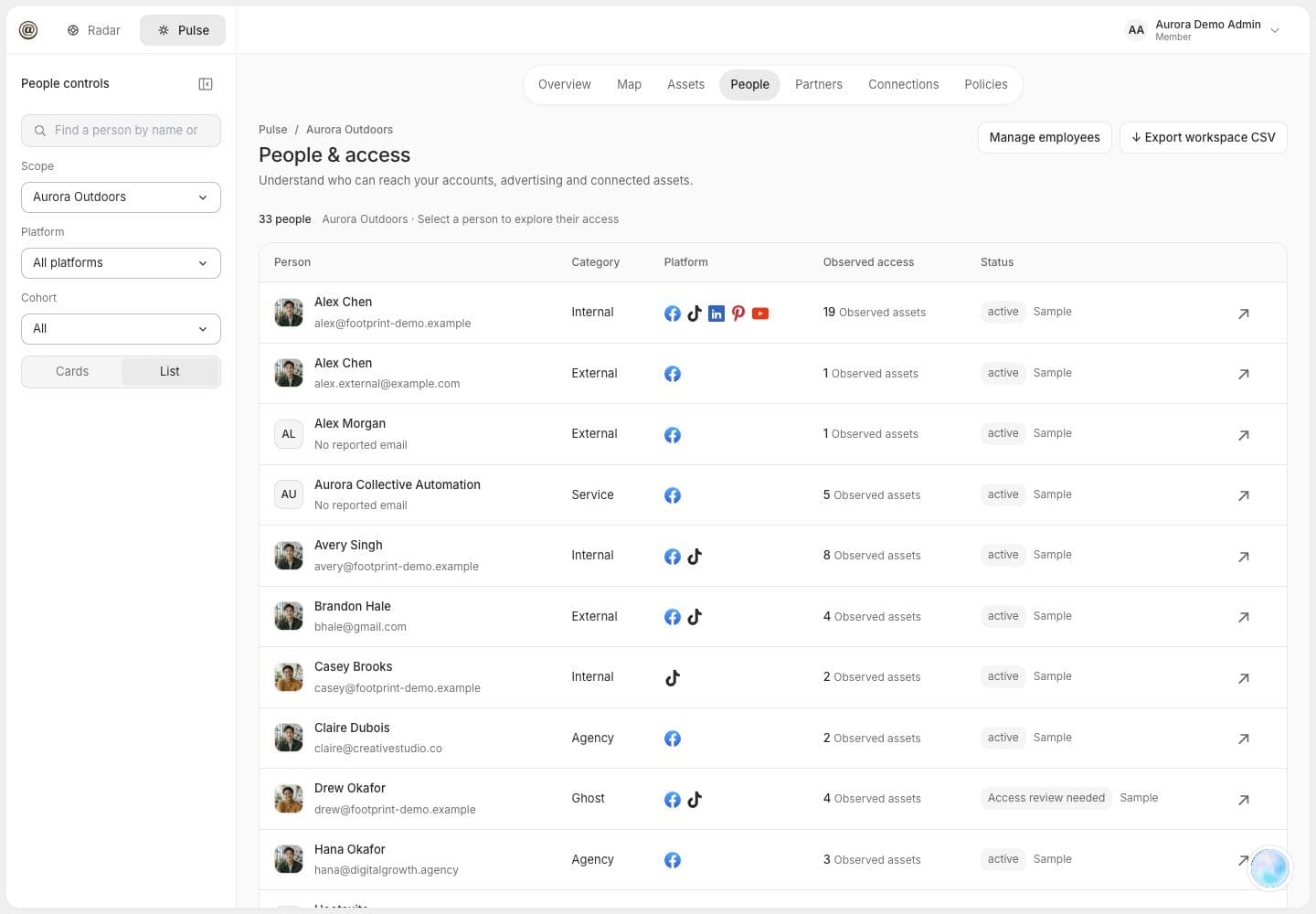
Figure 1
The process at a glance
- 1Record the genuine presencePulse holds each protected executive's official accounts, with the same ownership and access records as brand accounts, plus a standing authority to act.
- 2DetectRadar searches major platforms for accounts using the executive's name, imagery and titles alongside your brand terms, and shows candidates next to the genuine profile.
- 3DecideA specialist separates impersonation from namesakes, commentary and news, and assembles the evidence of deception, not just the copied photo.
- 4Submit, track, repeatA named approver signs off; we pursue the applicable route and keep watching for the recreation. Every case sits on one record legal, security and comms can read.
Customer story
Social media lets adidas connect worldwide, but fake accounts undermine our voice. The Handles team crushes that risk by wiping out fakes and safeguarding the authenticity of our official channels.
9,000+
social accounts removed for adidas in phase one.
Source: handles adidas case study
Frequently asked questions
What is executive impersonation?
The use of a real executive's name, photo, title or voice on an account or in content they do not control, in order to deceive staff, candidates, suppliers, investors or the public. It covers fake profiles, hijacked lookalike handles and deepfake audio or video.
Can a company report a fake executive profile, or must the executive do it?
Most platforms accept a report from the organisation with the executive's authority, and some will ask the executive to confirm identity directly. A standing written authority for each protected executive avoids delay when an incident happens.
Is CEO impersonation illegal?
Using someone's identity to defraud is a criminal matter in most jurisdictions, and misrepresentation can give rise to civil claims, but platform removal does not depend on a legal finding. Report to the platform first; involve counsel and law enforcement where money or data has been taken. Handles does not provide legal advice.
How do you tell impersonation from a namesake or a journalist?
A namesake is a real person with the same name; a journalist or critic is clearly not claiming to be the executive. Impersonation uses the executive's identity to mislead. We show the bio, imagery, posts and messages so a person decides, and we record that decision.
How fast can an executive fake be removed?
Days to weeks depending on the platform, the route and the evidence. Cases that arrive with the genuine profile, a signed authority and evidence of deception move fastest.
Does Handles cover deepfakes?
Radar surfaces accounts and content using a protected executive's name and imagery; synthetic video is reported under the platforms' impersonation and manipulated-media rules with the source footage as evidence.
Related: Fake LinkedIn profiles · Fake X accounts · Radar: impersonation detection
Tell us which executives need cover and we will show you what Radar finds today.
Request an executive impersonation reviewCheck the research and platform guidance behind claims used across the site in our sources & references .
Continue reading
All articles
How to find and remove fake LinkedIn profiles impersonating your brand
What LinkedIn's policy allows, who is entitled to report, the evidence that gets a result, the reasons reports fail, and what to do when the profile comes back.
How to find and remove fake X (Twitter) accounts impersonating your brand
What X's policy allows, who is entitled to report, the evidence that gets a result, the reasons reports fail, and what to do when the account comes back.
What to do if someone is impersonating your brand: a step-by-step guide
A practical response guide for social, marketing, security, legal and risk teams: capture evidence, protect customers, report fake accounts and prevent repeat impersonation.