
The Q4 sales rush is also impersonation season. Is your brand ready?
Prepare for peak trading with official account mapping, impersonation monitoring and a clear response plan for Black Friday, Christmas and beyond.
In this article
Social media brand protection belongs in your Q4 campaign plan because the discounts, urgency, and attention that drive holiday sales can also make impersonation convincing. Before Black Friday, Cyber Monday, Christmas, and post-Christmas sales, brands should map their official accounts, monitor for harmful fakes, and agree how teams will assess evidence, warn customers, and pursue platform action.
Waiting for a customer complaint leaves a gap
A Q4 campaign plan can account for every stage of a sale and still miss a critical question: what happens when someone else pretends to be the brand?
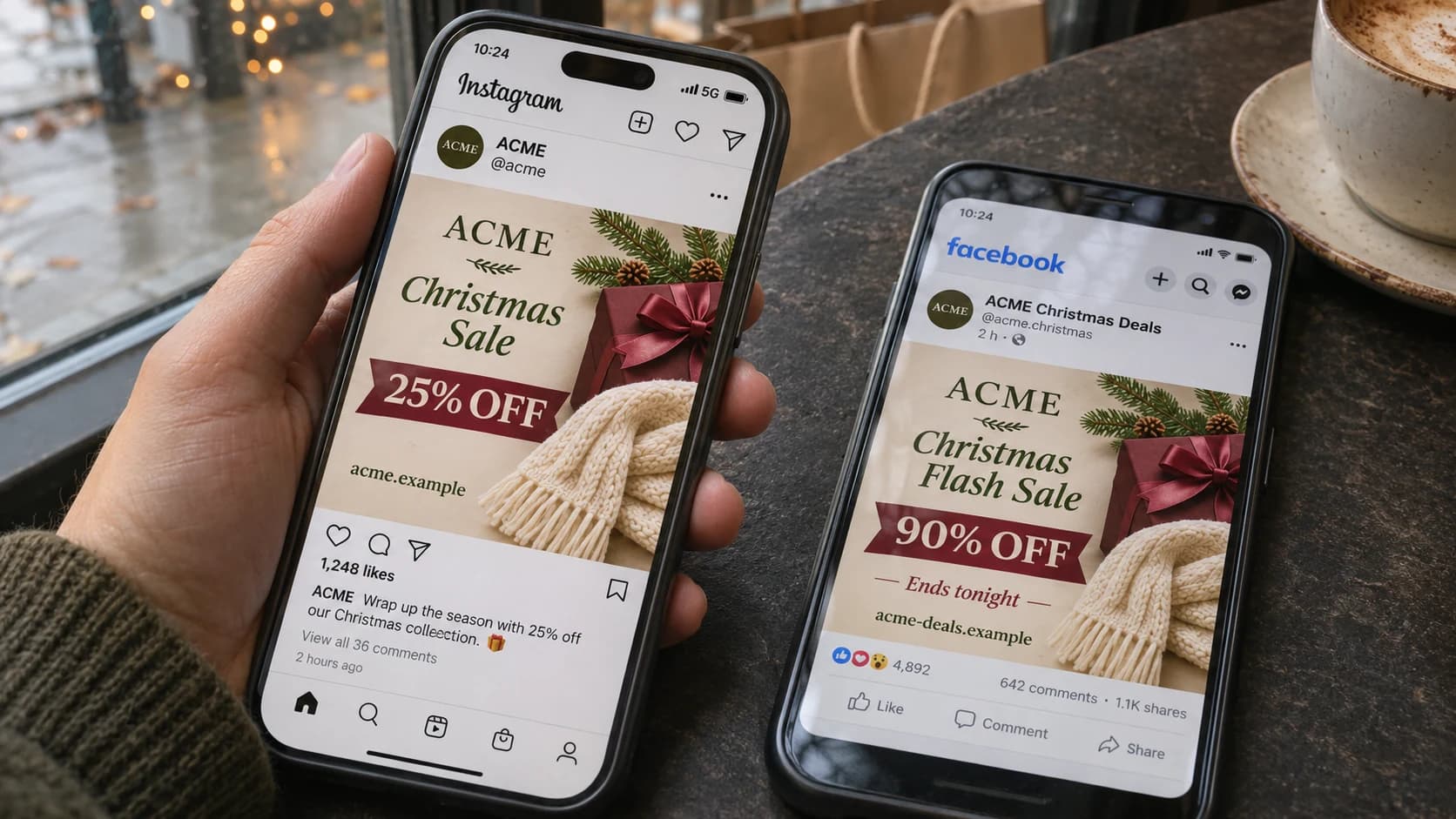
Consider a shopper who sees a Christmas promotion, then encounters a lookalike account advertising an extra discount. Or a customer who posts about a delayed order and receives a reply from an account posing as support, asking them to follow a payment link.
These are moments when the customer already has a reason to engage. Waiting for a complaint makes the customer the first line of detection, while marketing, customer service, ecommerce, and legal must coordinate a response under pressure.
Seasonal offers give impersonators a plausible story
During Black Friday and Cyber Monday, substantial discounts and limited availability are part of legitimate marketing. A copied campaign image and an urgent offer can therefore appear consistent with what a shopper expects.
Christmas adds delivery deadlines and gift buying pressure. Post-Christmas sales provide another credible reason for clearance prices, while order queries give fake support accounts a plausible opening.
The implication for brands is practical: campaign readiness should include checking how customers can distinguish a real promotion or support account from an imitation.
The evidence connects shopping fraud with social discovery
The US Federal Trade Commission, analyzing reports to its Consumer Sentinel Network, recorded $2.1 billion in reported losses from scams originating on social media in 2025. Its analysis covers several scam categories, including investment fraud, rather than brand impersonation alone.
In that same 2025 analysis, more than 40% of people who reported losing money to a social media scam said it began with an order for something advertised there. The FTC also describes ads directing people to websites impersonating familiar brands and offering steep discounts.
The seasonal exposure is visible in UK data too. The UK National Cyber Security Centre, citing City of London Police data, reported £11.8 million lost to online shopping fraud between November 1, 2024, and January 31, 2025.
Finding a suspicious account is the start of the work
The useful distinction is between discovering something suspicious and being ready to act on it. A list of lookalikes does little for the customer currently being directed toward a fraudulent checkout.
Context determines the response. A legitimate retail partner may need its relationship confirmed; a fan account may need no intervention; a dormant official account may need an ownership review.
An account posing as customer support and requesting payment deserves urgent assessment. Classifying these cases properly helps teams concentrate effort where customers face the greatest potential harm.
Five things to put in place before your next sales campaign
Map the accounts customers should trust
Create a shared record of official brand, regional, campaign, and support accounts, including their owners and legitimate partners. Give everyone handling reports access to it, so confirming whether an account belongs to the business takes minutes of checking rather than a chain of internal messages. Pulse brings connected official accounts and recorded access into one view, giving teams a baseline for that work.
Monitor around the moments you create demand
Use Radar to support impersonation monitoring around promotional launches and changes to offers, looking beyond usernames to copied imagery, support claims, and outbound links. Prioritize accounts asking for money, directing shoppers to suspicious checkout pages, or contacting customers who have requested help.
Assign the response before the first report arrives
Agree who assesses suspected impersonation, who prepares platform reports, and who approves customer communications. Name a coordinator and backup, with weekend and holiday coverage that reflects the campaign calendar.
Prepare evidence and escalation routes
Use a consistent case record containing account URLs, screenshots, timestamps, copied branding, suspicious destinations, and relevant ownership or rights documentation. Establish the appropriate reporting route for each platform, and track the response through to an outcome; submitting a claim does not confirm removal.
Make genuine channels easy to find
Link official social and support accounts from your website, and explain any boundaries customers should know, such as whether support ever requests payment through direct messages. Continue monitoring through post-Christmas sales and into January returns, when customer questions outlast the Q4 campaign.
Build protection into campaign delivery
handles supports this work by helping brands map connected accounts and access in Pulse and organize their response to impersonation. Radar searches for candidate accounts, examines imagery, content, and links, and gives reviewers evidence to decide which cases need action.
Human review separates harmful impersonation from legitimate activity. Radar then keeps evidence, approved claims, and platform responses together, while removal remains subject to platform review and applicable policies.
Customer story
“Social media lets adidas connect worldwide, but fake accounts undermine our voice.”
A campaign creates a promise customers expect the brand to fulfill. Planning for impersonation helps teams protect the route from that promise to a genuine purchase or support interaction.
Speak to the handles team about preparing your social media brand protection for peak trading.
Speak to the handles teamCheck the research and platform guidance behind claims used across the site in our sources & references .
Continue reading
All articles
Brand impersonation during campaigns: why attention attracts imitators
Impersonation spikes when brand attention spikes. Learn why campaign launches draw fake accounts, and how to turn detection into evidence and action.
What to do if someone is impersonating your brand: a step-by-step guide
A practical response guide for social, marketing, security, legal and risk teams: capture evidence, protect customers, report fake accounts and prevent repeat impersonation.
How to audit social media impersonation
Find accounts using your brand identity, assess potential harm and record evidence for platform reports.