Our Mission
Social media has undergone a major transformation
Partners
We are partners with industry leaders
Customers
Updating brand assets across accounts is a nightmare.
Our Mission
Social media has undergone a major transformation
Partners
We are partners with industry leaders
Customers
Updating brand assets across accounts is a nightmare.
Our Mission
Social media has undergone a major transformation
Partners
We are partners with industry leaders
Customers
Updating brand assets across accounts is a nightmare.
Inside the Social Media Handle Economy
How an investigation into a hidden market became the infrastructure to fix it.

Bill Roberts
Founder

When we started handles.ai three years ago, it wasn't as a service or a startup pitch — it was an investigation. We wanted to understand how the global market for social media handles actually operated.
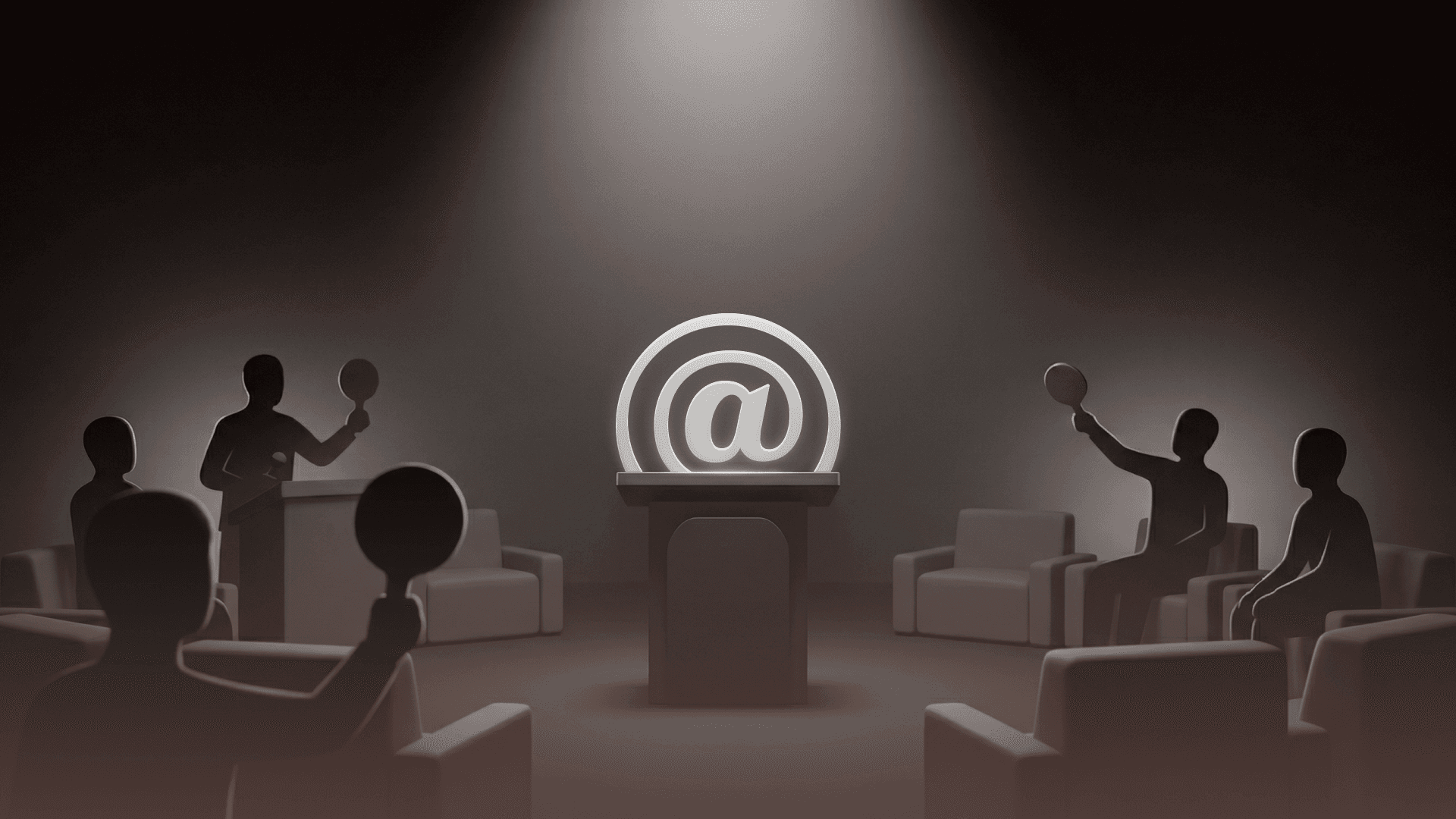
What began as curiosity turned into years of conversations with sellers, platforms, and brand representatives. We watched hidden markets unfold in real time on Telegram. We documented the ways digital identity has quietly become one of the most valuable, misunderstood asset classes on the internet.
What we uncovered was a fragmented, high-stakes economy built in the shadows of social media platforms — one defined by scarcity, policy loopholes, and ingenuity, but also by exploitation and risk.
The Hidden Industry Beneath Every Username
Every major platform has an unspoken economy around its most desirable handles. Usernames like @bill, @jane, or @paris aren't just vanity identifiers — they represent linguistic scarcity. They are singular, immutable, and tied to digital identity in a way that trademarks and domains once were.
But unlike domains, social handles were never meant to be traded.
Platforms prohibit it. There's no legitimate marketplace. And yet, demand from brands, influencers, and investors has made trading inevitable. Where regulation doesn't exist, workarounds emerge.
Behind the scenes, a parallel industry has formed. Encrypted Telegram groups, invite-only forums, and private brokers coordinate the sale and exchange of handles worth anywhere from a few hundred to hundreds of thousands of dollars. Within those channels, we've seen how ingenuity collides with ethical ambiguity — and how far some will go to obtain a few letters.
How the Grey Market Operates
Our work brought us into contact with both legitimate sellers and people operating on the fringes of legality. We witnessed tactics that ranged from clever to criminal:
Platform Exploits: On X (formerly Twitter), we observed a method using death certificate forms intended for memorialization. Bad actors submitted falsified documents, triggering account deletions — freeing valuable handles to be claimed moments later.
Trademark Manipulation: On Instagram, a now-patched loophole allowed users to weaponize the trademark report form in reverse. A buyer could file a fake claim asserting they owned a trademark related to an unrelated handle (say, @billr12345), link it to their own account (for example, @appbill), and once the system transferred the mark, the target handle (@appbill) would release — ready to be claimed.
Coercion and Blackmail: In one documented case, an individual was blackmailed using explicit material to pressure them into transferring handles from within a platform's internal system. It was a reminder that behind every transaction, there are real people — and real harm.
These weren't isolated incidents. Across encrypted channels, we observed price lists, escrow middlemen, rating systems, and even contracts written in crypto wallets.
It was, in essence, a functioning economy — unregulated, but organized.
Why It Exists
The existence of this underground market isn't a mystery. It's a response to neglect.
Platforms have no consistent process for reclaiming inactive handles, no standard for brand conflicts, and no incentive to mediate disputes.
A global brand can own a trademark for a decade, only to find the matching handle inactive and unreachable. Contact forms go unanswered for months. In that vacuum, third-party markets inevitably emerge.
It's not greed that sustains this economy — it's demand without infrastructure.
How We Built the System the Market Was Missing
What started as an investigation became something more. We saw that this market could be structured — that there was a legitimate way to bridge brands' demand with ethical, secure acquisition processes.
We verified sellers with ID checks and facial recognition. We implemented financial guarantees to prevent fraud. We managed migrations and technical transfers, sometimes working with platform support teams quietly willing to cooperate.
What we found is that even in a market built on scarcity and secrecy, trust could be introduced — but only if you built the systems to enforce it.
The systemic issue was never just bad actors. It was a lack of infrastructure. Every transaction existed in a grey zone, always at risk of reversal. Success required precision, compliance, and sometimes creative legal frameworks — from corporate entity transfers to internal asset reassignment.
That understanding shaped everything we built at handles.ai. Today, our platform doesn't just facilitate acquisitions — it provides brands with the tools to monitor, protect, and govern their digital identity across every major social platform. From automated infringement detection with Radar to secure handle management through Vault, we've turned hard-won knowledge of the grey market into enterprise-grade protection against it.
From Vanity to Digital Infrastructure
Through that process, one truth became clear: social handles are no longer vanity assets. They are infrastructure for digital identity.
A handle defines how a person, brand, or institution is located, verified, and recognized online. In a world where one in three searches now start on social media, a handle is a front door, not a footnote.
We've seen brands gain measurable trust and engagement simply by securing the right name. We've also seen platforms quietly acknowledge the market's inevitability — even adopting its logic:
Telegram now operates an official handle marketplace, giving early users a formal path to monetize their assets.
X began selling handles to enterprise-tier subscribers, legitimizing what was once forbidden.
These moves validate what we observed: the handle economy was never a niche — it was a preview of where digital identity commerce was heading.
The Future of Handle Ownership
The future will demand clearer rights and stronger protections for digital identity.
If a handle can be bought, sold, or seized, it requires a framework for ownership and recourse. The parallels with domain registration, NFT verification, and even number plate ownership are impossible to ignore.
The @X handle transfer during Elon Musk's rebrand — where the original owner lost their handle overnight — underscored a central truth: platforms still hold ultimate authority, regardless of value or investment. Until that changes, the line between ownership and access will remain blurred.
That's exactly why we built handles.ai. Not just to help brands acquire the names they need, but to protect what they already have — and to bring structure, transparency, and accountability to a space that has operated without any.
What's at stake?
The market for social handles is growing faster than the systems meant to govern it.
The next phase of digital identity will need clearer definitions of ownership, protection, and transfer. Because what's at stake isn't just a username — it's trust, authenticity, and how the internet defines who we are.
If you're a brand navigating this landscape, we can help.

When we started handles.ai three years ago, it wasn't as a service or a startup pitch — it was an investigation. We wanted to understand how the global market for social media handles actually operated.
What began as curiosity turned into years of conversations with sellers, platforms, and brand representatives. We watched hidden markets unfold in real time on Telegram. We documented the ways digital identity has quietly become one of the most valuable, misunderstood asset classes on the internet.
What we uncovered was a fragmented, high-stakes economy built in the shadows of social media platforms — one defined by scarcity, policy loopholes, and ingenuity, but also by exploitation and risk.
The Hidden Industry Beneath Every Username
Every major platform has an unspoken economy around its most desirable handles. Usernames like @bill, @jane, or @paris aren't just vanity identifiers — they represent linguistic scarcity. They are singular, immutable, and tied to digital identity in a way that trademarks and domains once were.
But unlike domains, social handles were never meant to be traded.
Platforms prohibit it. There's no legitimate marketplace. And yet, demand from brands, influencers, and investors has made trading inevitable. Where regulation doesn't exist, workarounds emerge.
Behind the scenes, a parallel industry has formed. Encrypted Telegram groups, invite-only forums, and private brokers coordinate the sale and exchange of handles worth anywhere from a few hundred to hundreds of thousands of dollars. Within those channels, we've seen how ingenuity collides with ethical ambiguity — and how far some will go to obtain a few letters.
How the Grey Market Operates
Our work brought us into contact with both legitimate sellers and people operating on the fringes of legality. We witnessed tactics that ranged from clever to criminal:
Platform Exploits: On X (formerly Twitter), we observed a method using death certificate forms intended for memorialization. Bad actors submitted falsified documents, triggering account deletions — freeing valuable handles to be claimed moments later.
Trademark Manipulation: On Instagram, a now-patched loophole allowed users to weaponize the trademark report form in reverse. A buyer could file a fake claim asserting they owned a trademark related to an unrelated handle (say, @billr12345), link it to their own account (for example, @appbill), and once the system transferred the mark, the target handle (@appbill) would release — ready to be claimed.
Coercion and Blackmail: In one documented case, an individual was blackmailed using explicit material to pressure them into transferring handles from within a platform's internal system. It was a reminder that behind every transaction, there are real people — and real harm.
These weren't isolated incidents. Across encrypted channels, we observed price lists, escrow middlemen, rating systems, and even contracts written in crypto wallets.
It was, in essence, a functioning economy — unregulated, but organized.
Why It Exists
The existence of this underground market isn't a mystery. It's a response to neglect.
Platforms have no consistent process for reclaiming inactive handles, no standard for brand conflicts, and no incentive to mediate disputes.
A global brand can own a trademark for a decade, only to find the matching handle inactive and unreachable. Contact forms go unanswered for months. In that vacuum, third-party markets inevitably emerge.
It's not greed that sustains this economy — it's demand without infrastructure.
How We Built the System the Market Was Missing
What started as an investigation became something more. We saw that this market could be structured — that there was a legitimate way to bridge brands' demand with ethical, secure acquisition processes.
We verified sellers with ID checks and facial recognition. We implemented financial guarantees to prevent fraud. We managed migrations and technical transfers, sometimes working with platform support teams quietly willing to cooperate.
What we found is that even in a market built on scarcity and secrecy, trust could be introduced — but only if you built the systems to enforce it.
The systemic issue was never just bad actors. It was a lack of infrastructure. Every transaction existed in a grey zone, always at risk of reversal. Success required precision, compliance, and sometimes creative legal frameworks — from corporate entity transfers to internal asset reassignment.
That understanding shaped everything we built at handles.ai. Today, our platform doesn't just facilitate acquisitions — it provides brands with the tools to monitor, protect, and govern their digital identity across every major social platform. From automated infringement detection with Radar to secure handle management through Vault, we've turned hard-won knowledge of the grey market into enterprise-grade protection against it.
From Vanity to Digital Infrastructure
Through that process, one truth became clear: social handles are no longer vanity assets. They are infrastructure for digital identity.
A handle defines how a person, brand, or institution is located, verified, and recognized online. In a world where one in three searches now start on social media, a handle is a front door, not a footnote.
We've seen brands gain measurable trust and engagement simply by securing the right name. We've also seen platforms quietly acknowledge the market's inevitability — even adopting its logic:
Telegram now operates an official handle marketplace, giving early users a formal path to monetize their assets.
X began selling handles to enterprise-tier subscribers, legitimizing what was once forbidden.
These moves validate what we observed: the handle economy was never a niche — it was a preview of where digital identity commerce was heading.
The Future of Handle Ownership
The future will demand clearer rights and stronger protections for digital identity.
If a handle can be bought, sold, or seized, it requires a framework for ownership and recourse. The parallels with domain registration, NFT verification, and even number plate ownership are impossible to ignore.
The @X handle transfer during Elon Musk's rebrand — where the original owner lost their handle overnight — underscored a central truth: platforms still hold ultimate authority, regardless of value or investment. Until that changes, the line between ownership and access will remain blurred.
That's exactly why we built handles.ai. Not just to help brands acquire the names they need, but to protect what they already have — and to bring structure, transparency, and accountability to a space that has operated without any.
What's at stake?
The market for social handles is growing faster than the systems meant to govern it.
The next phase of digital identity will need clearer definitions of ownership, protection, and transfer. Because what's at stake isn't just a username — it's trust, authenticity, and how the internet defines who we are.
If you're a brand navigating this landscape, we can help.
Social media governance
& Infrastructure.
Social media governance
& Infrastructure.

© 2026 Handles.ai. All Rights Reserved.